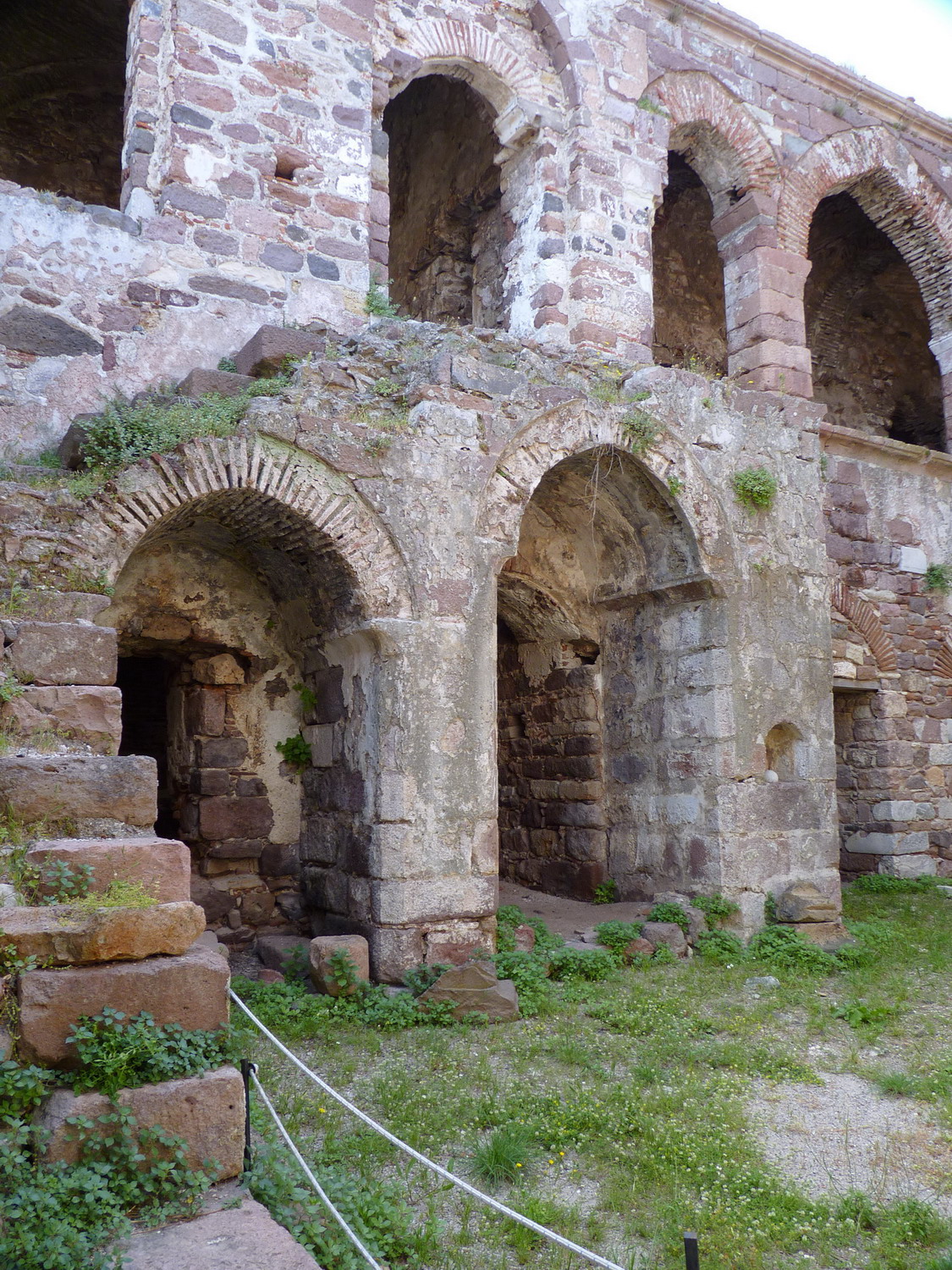
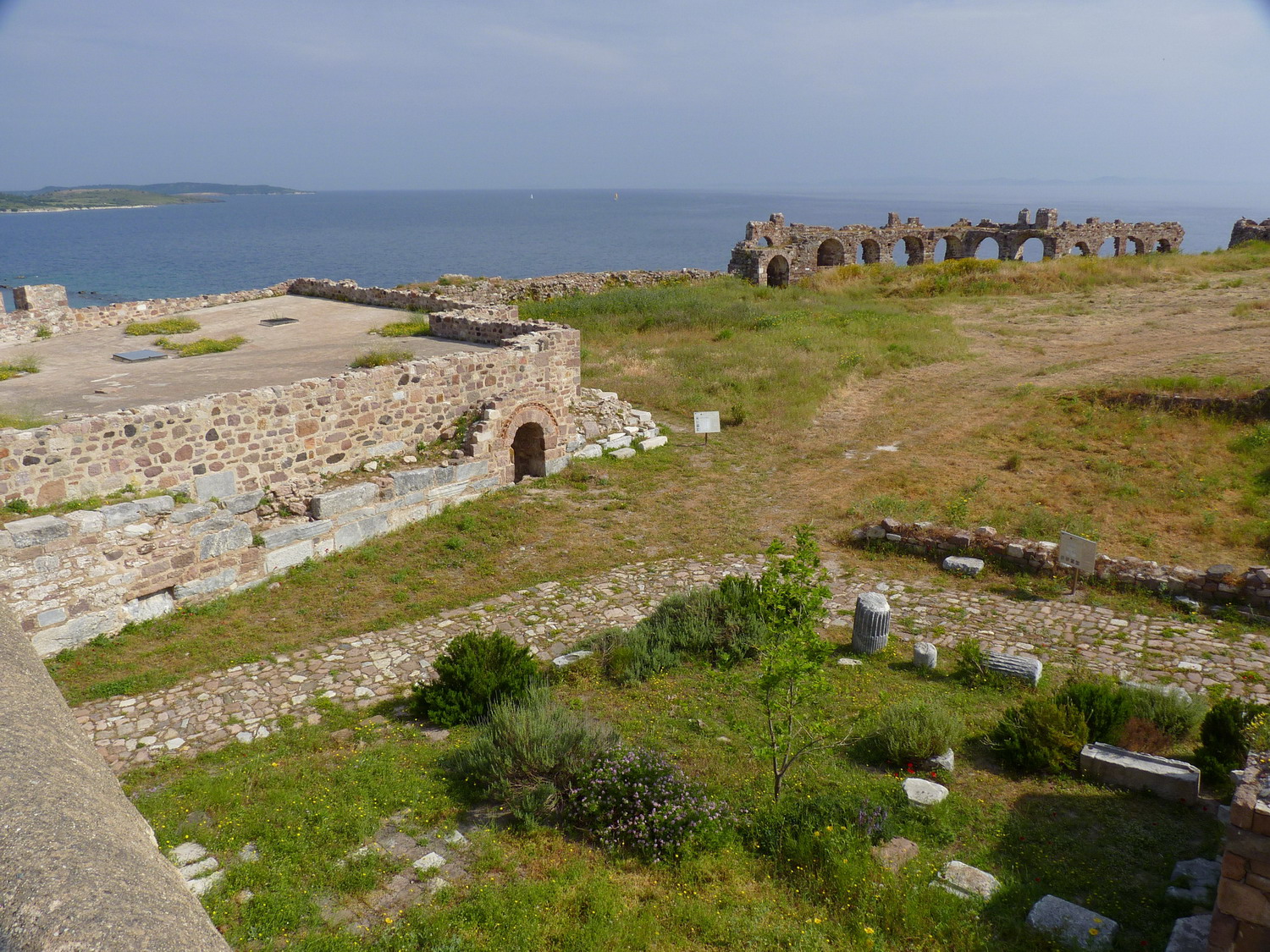
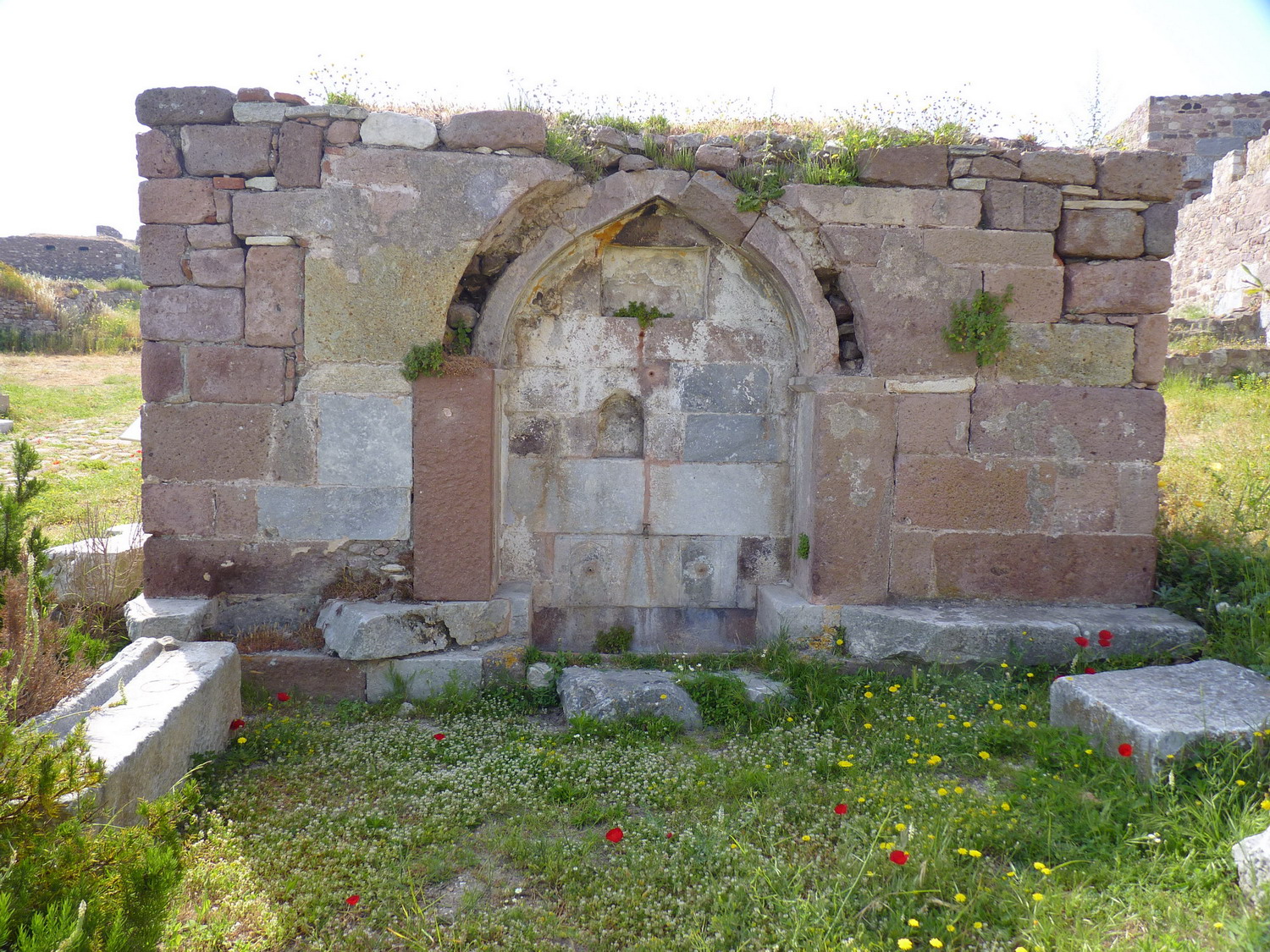
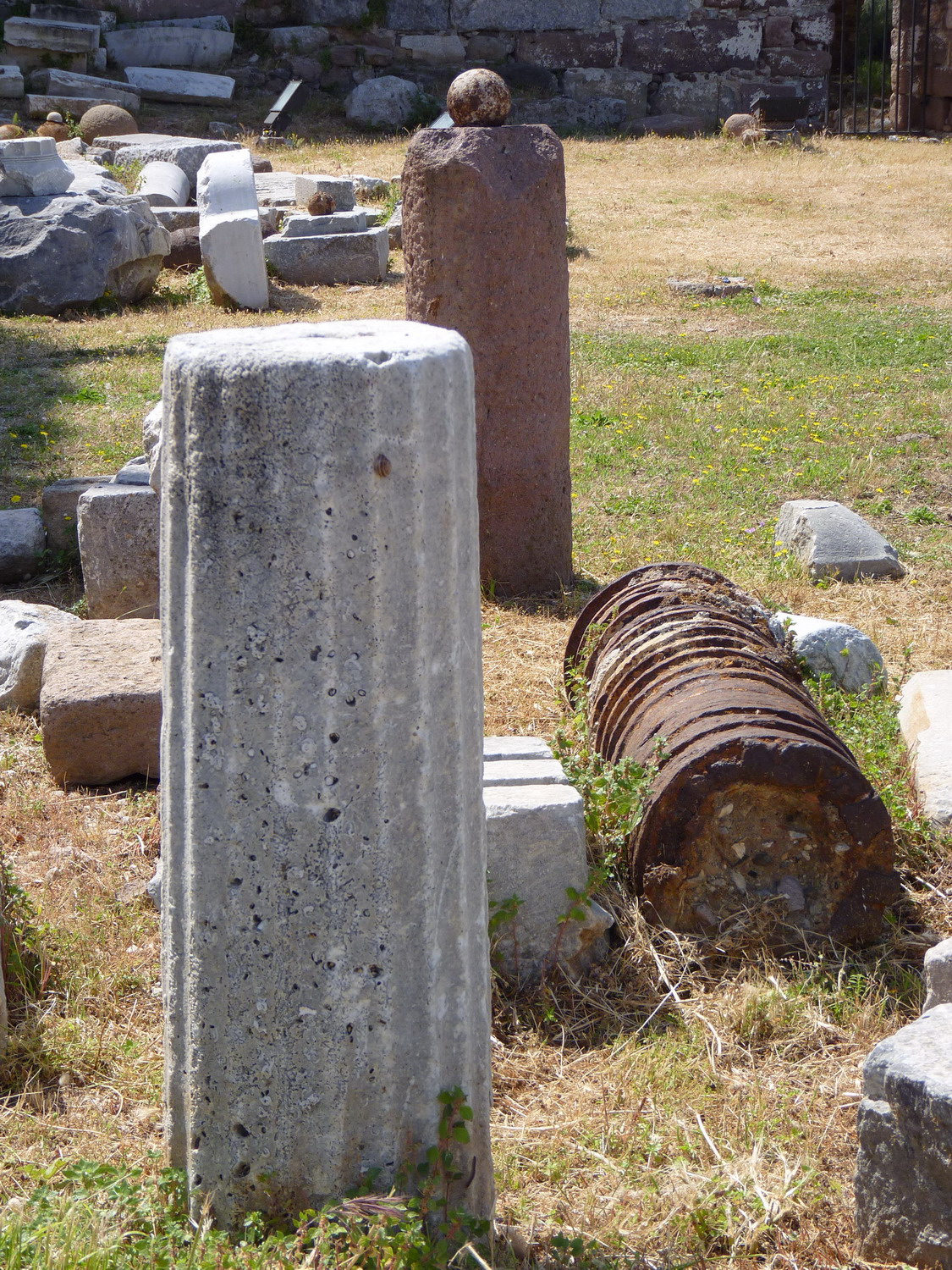
 Mytilene Kastro (Castle), located on an ancient site where there was once reputedly an acropolis, is perhaps the greatest treasure of Lesvos and ample time should be allowed to explore the extensive ruins. The main public access is off Odos Novembriou and the entrance fee is such a bargain at €2. It is also worth splurging another €6 (2011 prices) on the souvenir guide book, although all the buildings and features have explanatory boards – with most items described in English. It does pay to wear sturdy shoes to visit the site, take care where you put your feet and stay away from edges of walls – please beware of crumbling stones and after any rain, it could also be slippery.
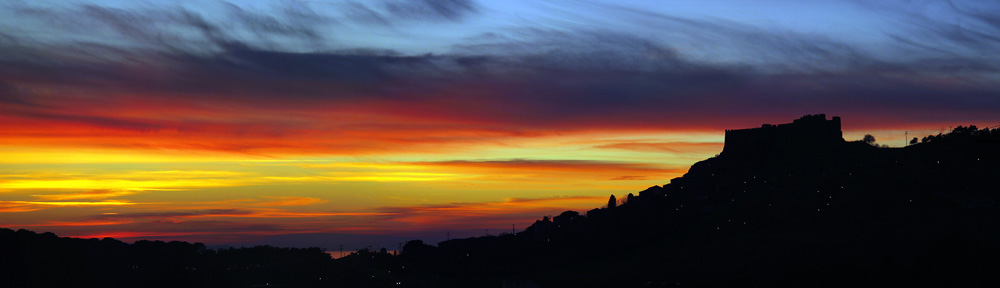
The Kastro covers a massive area which from all angles and corners affords excellent views over the city, the coast and across the sea to Turkey. It is itself a major landmark from all over Mytilini, from the coastal roads north and south and especially from the air as you fly along the coast past the city en route to/from the airport.
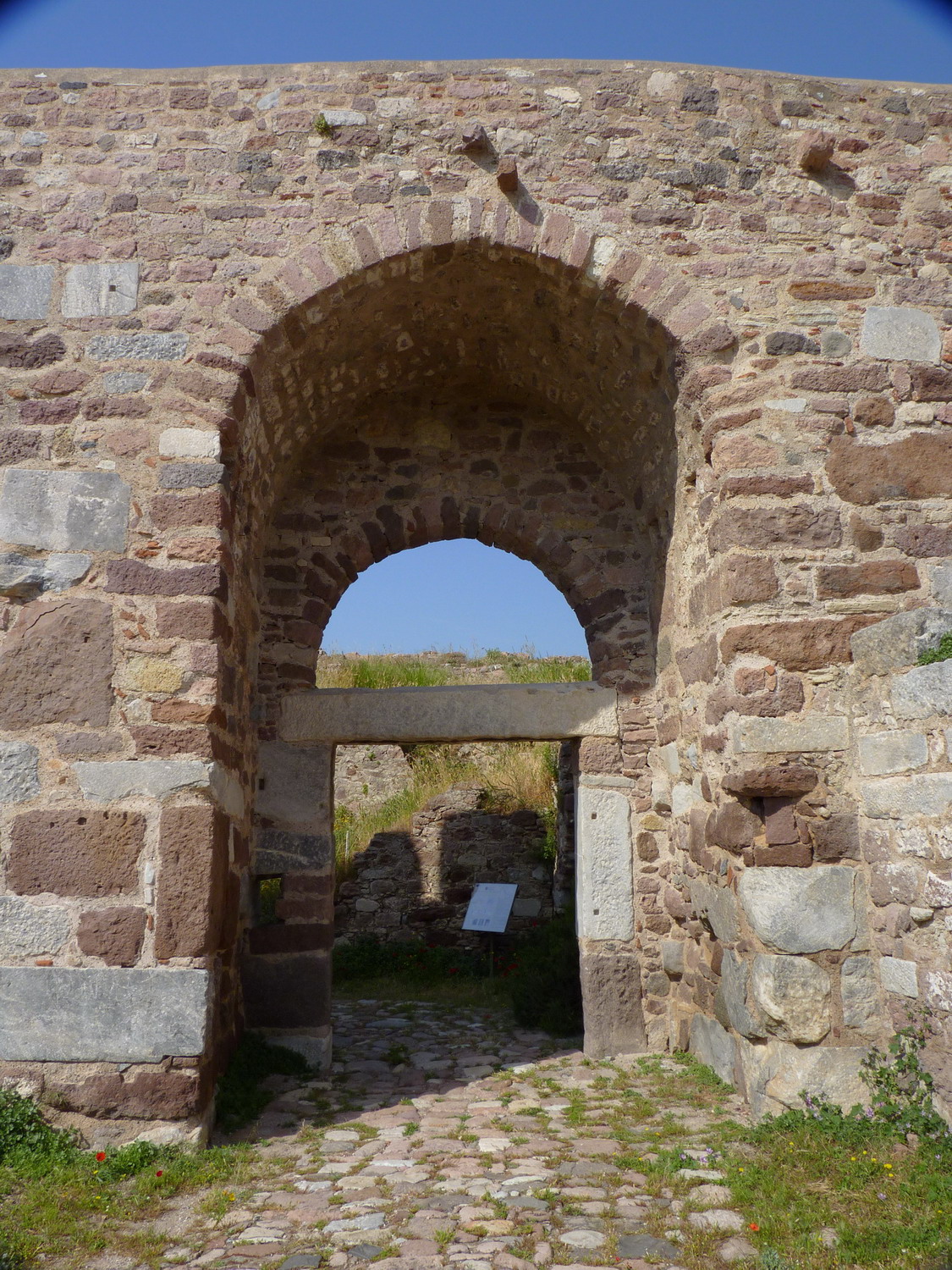
The Kastro sits on a large promontory, at one time effectively an island as it was separated from the city by a canal that ran between north and south harbours roughly along what is now Ermou Street. The complex had three main building stages – Byzantine, Genoese and Turkish. The oldest section is the Epano Kastro (Upper Castle), this being the main fortified enclosure. Here were constructed the main administration buildings and religious housings, including the Christian church of Agios Ioannis whose ruins were later used as the base for the construction of a mosque. Dating from 1373 and being the work of Francesco Gatelussi, the Mesaio Kastro (Middle Castle) encompasses several imposing buildings – a military hospital, a prison, the powder magazine, the Ottoman Theological School, the domed monastery (home to the Ottoman monks), and the cistern storage facility for the water supply. The Kato Kastro (Lower Castle) dates from 1644, constructed to protect the north harbour and was accessed from the middle castle via a Byzantine gate.
On our visit we meandered around taking dozens – no hundreds – of photos, peered at the ruins of the vast complex of buildings, climbed up the walkway onto the walls and generally had a good mooch around. There was a man cutting the grass and decapitating wildflowers for which I silently cursed him as I think these sites are made extra special by the profusion of flowers which are now the residents where people once lived and worked. Life goes on.
Having arrived at opening time we spent a good two hours exploring, with the site to ourselves, after which we walked up to the northern harbour, where the castle boundary meets the sea and you can see evidence of the ancient walls and breakwater stretching out under the water.
Walking back along the coast road 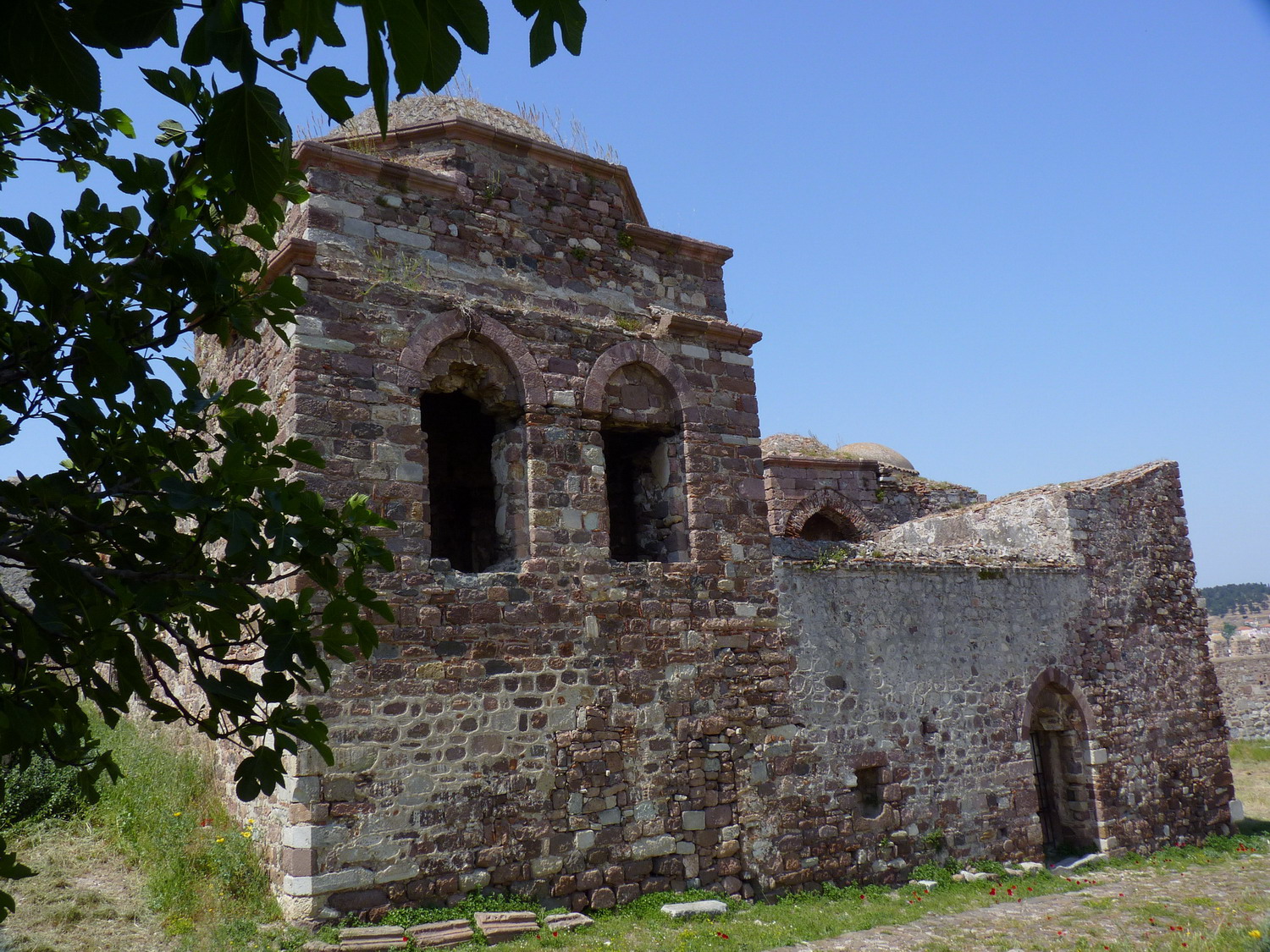 which runs below the castle you pass through the Kato (Lower) Kastro complex, with its ruined mansions and a bathhouse which is being restored. This part of the castle, including an Ottoman gate, was partially demolished to make way for this city relief road back in the 1960s. Today they would no doubt be compelled to find another solution! This had originally been a dirt road, but has now been surfaced and provides an attractive alternative route to Novembriou Street, with the sea on one side and the green pine-clad slopes up to the impressive castle walls on the other.
There is a small museum on-site with displays of pottery, coins and artefacts found during excavations.
 the museum (plus beer and food would not go amiss), we walked up a cobbled path into the village, which was very quiet. Along the main street, we said hello to a couple of ladies sitting outside a small taverna and inevitably got chatting. The younger of the two introduced herself as Maria and whilst this was her home village and she was visiting her mother (the older lady – also Maria) she lived now in Sydney. She, therefore, spoke good English and on our enquiries told us that the key holder for the museum was the priest and he was away from the village today.
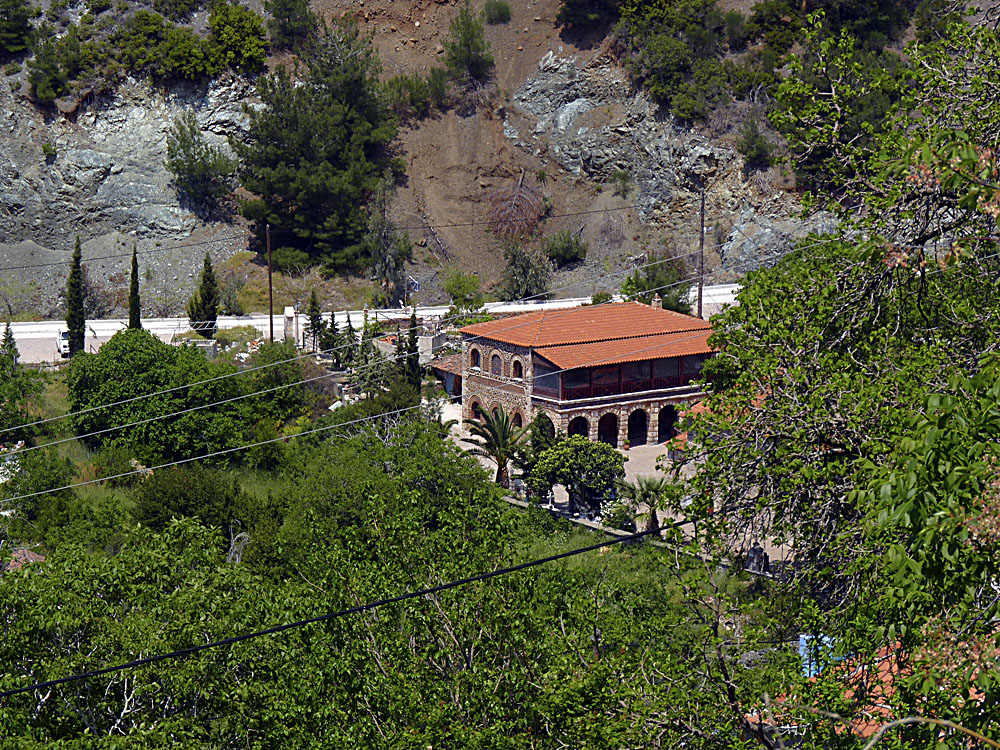
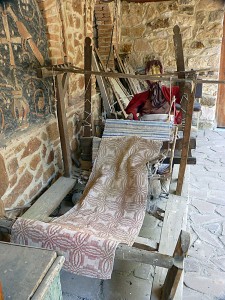 As we chatted Mama Maria ambled off and came back a few minutes later and presented me with a small sprig of herbs from her garden. It appeared this was the family taverna, but unfortunately they had no food to offer today and there was no bakery in the village. Maria said we might get food at the taverna up on the main road which passes by the top of the village so we headed up there. Yes – we could get a beer, but no, there was no food here either. So we settled for a Mythos apiece and took a seat under the trees at the side of the road, above the village rooftops and neat terraced gardens. We shall definitely go back – it is a well-situated village, perched on a hillside with great views and have no doubt that exploration will prove rewarding. We ambled back down though the narrow streets, again passing the museum. If we manage to find it open in 2013 I will update this report. If someone else gets there before me please feel free to add your own piece.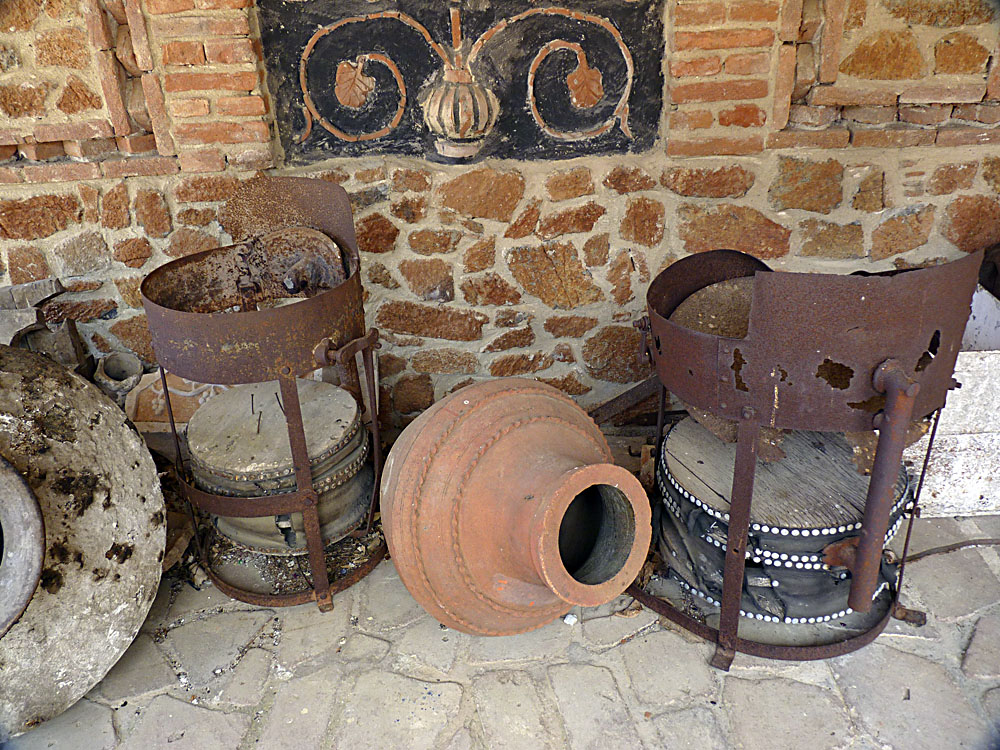

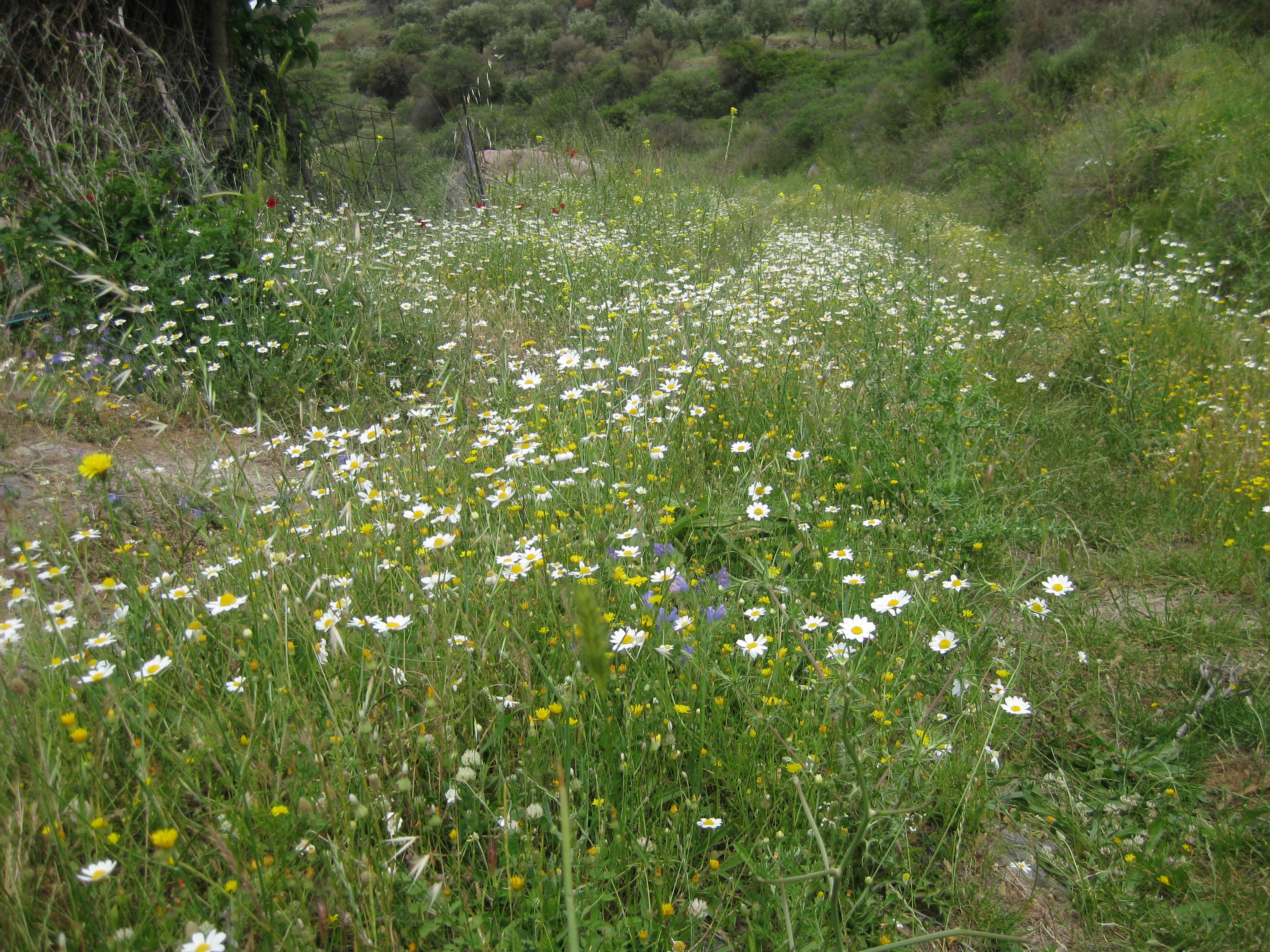
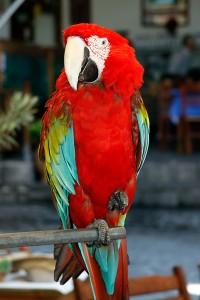 I decided to call Alex as I was convinced that the boat would be cancelled. He answered with his usual cheery smile and told me that the sun was shining in Petra and yes of course the boat would be running! With our moods lifted the clouds followed suit and the sun appeared – we walked the rest of the walk ion lovely warm sunshine – again a lovely walk that I can highly recommend. We made it to Skala Sikaminia only minutes behind the boat. A meal in the taverna with the mad parrot and a bottle of Limnos wine certainly made up for the damp clothes.
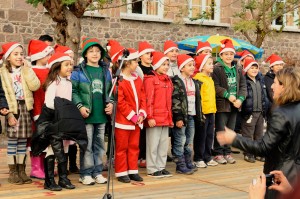 The Christmas Fair takes place each year at the school in Molyvos with the proceeds going towards items needed by the school. Previous years proceeds have resulted in new classroom furniture and much needed computer equipment, very worthwhile causes. Due to bad weather on Sunday morning I thought the Fair was never going to take place. However the stalls had been laid out in the morning and nothing was going to stop it going ahead. A final downpour about an hour after the Fair had opened sent everyone rushing for pieces of plastic to cover over their stalls. Even though some things for sale got a little damp it didn’t stop the fun. It is nice to see that in these times of hardship people still turn out (even in the rain) to support the village.There were lots of nice things on offer including a beautifully laid out stall of handmade Christmas handicrafts, a selection of toys, dolls with handmade individual knitted outfits, tom-bola, children’s clothing, gift ideas, wheel of fortune and even horse rides. There were different tables of food, donated by people of different nationalities for everyone to sample, and of course you can’t have this type of event without the obligatory mulled wine, hot dogs and popcorn. The smells of which wafted around the playground which really made you want to try them out. I can personally recommend the mulled wine. The children of the school sang Christmas songs. Santa turned up and the donkey,which was part of the Nativity setting, gave rides to the children. All in all a very satisfying event. We shall look forward to this again next year. Lets just hope the weather is a little kinder.