I hope that you have all been good boys and girls and Santa has brought you everything you deserve.
Perhaps 2013 will see you visiting Lesvos and enjoying its beauty and culture.
Best wishes for the coming year to you and yours from molyvos.eu.
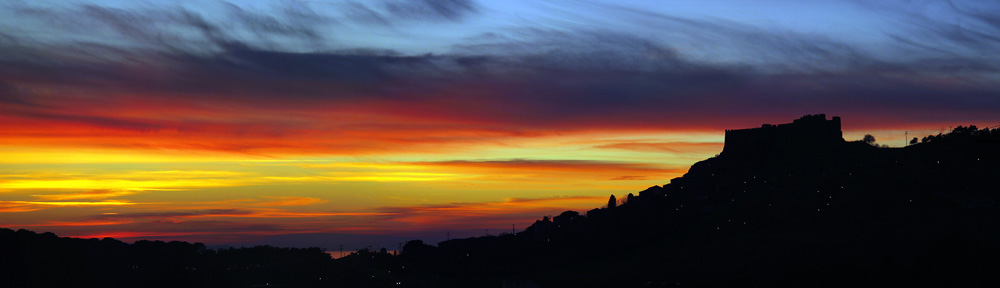
I hope that you have all been good boys and girls and Santa has brought you everything you deserve.
Perhaps 2013 will see you visiting Lesvos and enjoying its beauty and culture.
Best wishes for the coming year to you and yours from molyvos.eu.
If you want information about Mytilene Castle, please visit the new page
You can find it in the “Things to do” – “Ancient Sites” section.
There is even a map showing the location of the entrance.
Rating agency Standard and Poor’s ratcheted the credit rating on the troubled eurozone nation’s government debt up six notches from ‘standard default’ to ‘B minus’ following the successful completion on Monday of its bond buyback programme – one grade higher than expected.
The agency lowered Greece’s credit rating from CCC to ‘selective default’ after Athens invited bondholders to participate in a series of debt buyback auctions on December 3, saying it expected to restore the rating on completion of the programme.
S&P said in its statement: “The upgrade reflects our view of the strong determination of European Economic and Monetary Union (eurozone) member states to preserve Greek membership in the eurozone.
“The outlook on the long-term rating is stable, balancing our view of the government’s commitment to a fiscal and structural adjustment against the economic and political challenges of doing so.”
20 December 2012
Lesvos lies close to the coast of Turkey and continues to be a route to “freedom” in the EU used by refugees from conflict, persecution and poverty. The waters between Lesvos and Turkey are not always as warm and inviting as they are during the holiday season.
On Friday 14 December a man was pulled from the water 1.3 nautical miles off the northeast coast of Lesvos. He reported that he had been one of 28 Afghan refugees on board a boat that had left the Turkish coast in the early hours of that morning attempting to cross to Lesvos. Sea conditions had caused the boat to sink. He reported that he had been in the water for 5 hours. He was initially reported as 20 years old this was later changed to 16.
A search and rescue mission was launched by the Hellenic Coast Guard assisted by private boats and teams on land. There was much confusion over the number of people involved, by Sunday it had been agreed that in addition to the refugees, there were 2 Turkish men.
Over the next 3 days, 21 bodies of men were recovered from the sea and the shore near Thermi. Seven people remain unaccounted for.
Despite this tragedy, refugees continue to attempt the crossing. On 19 December a group of 20 children, 8 women and 20 men were arrested in Mytilene for illegally entering Greece.
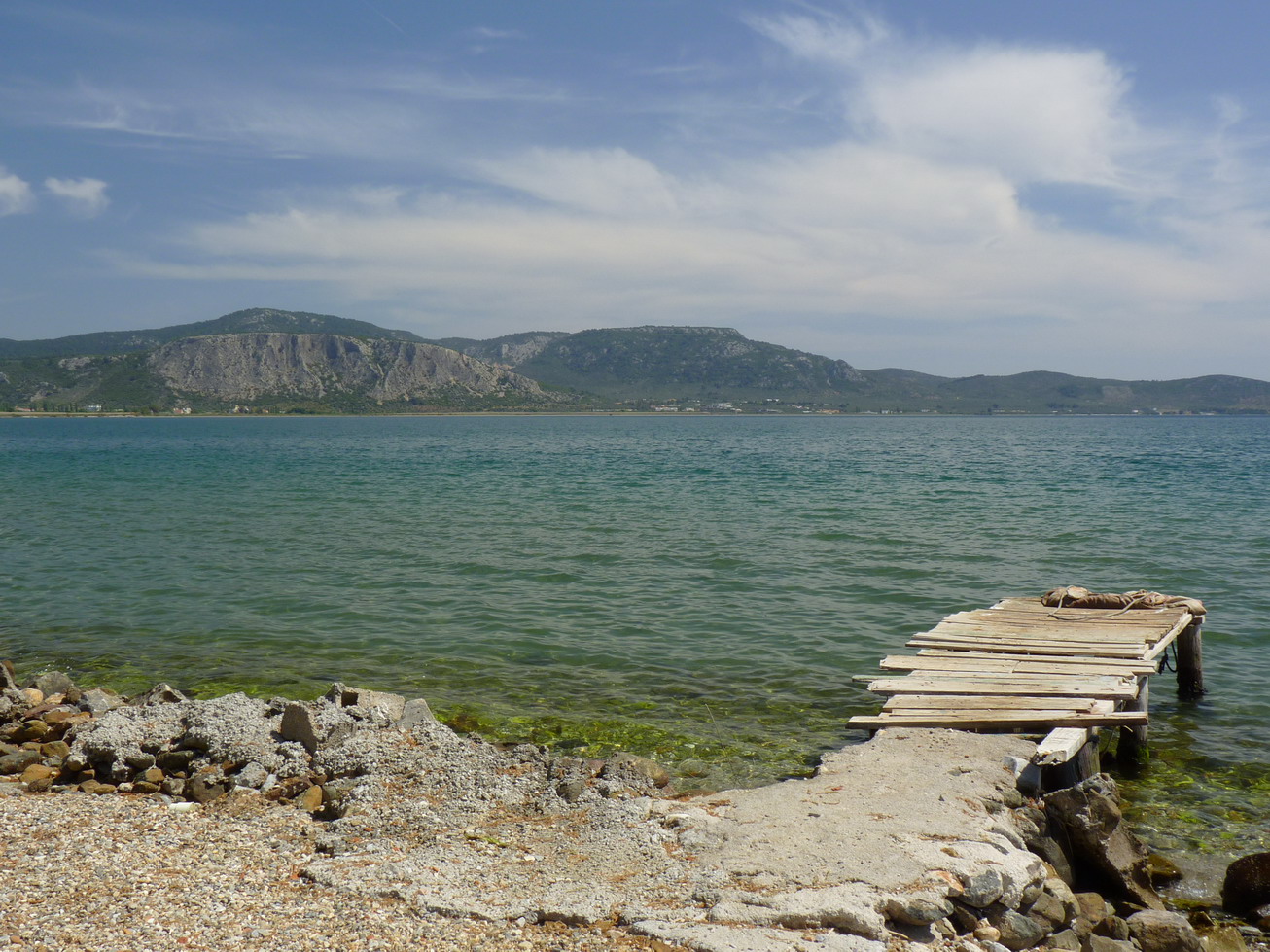
South of Mytilene airport the road stays close to the coast, with wide views across the sea to Turkey on your left and hills covered with thick vegetation rising on the right to the ridge that runs northwards along the centre of the peninsula. As it heads for the end of the peninsula the road turns inland and eventually arrives at a junction. If you keep to the right you will head back north along the Gulf of Gera towards Loutra. However, if you take the left-hand junction at this point the road narrows down to a dead-end at pine trees overlooking a jaw-dropping view of the bay at Agios Ermogenis.
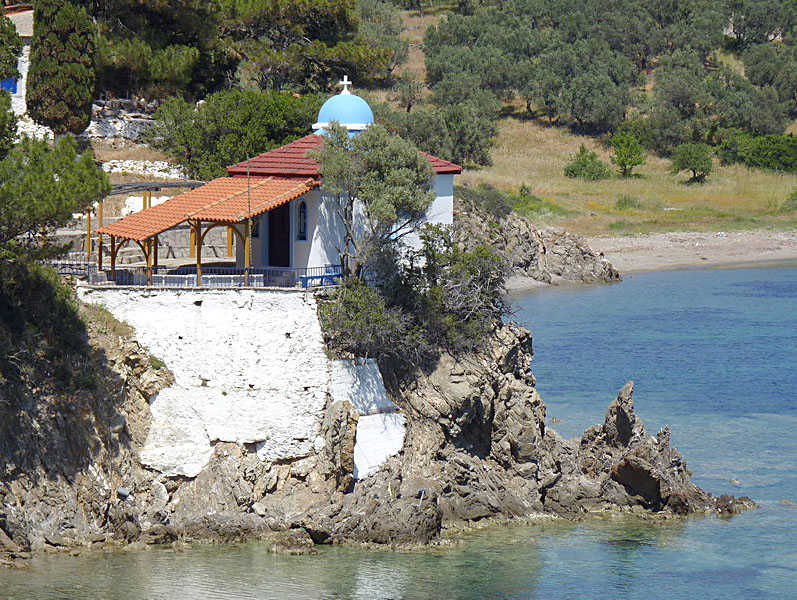
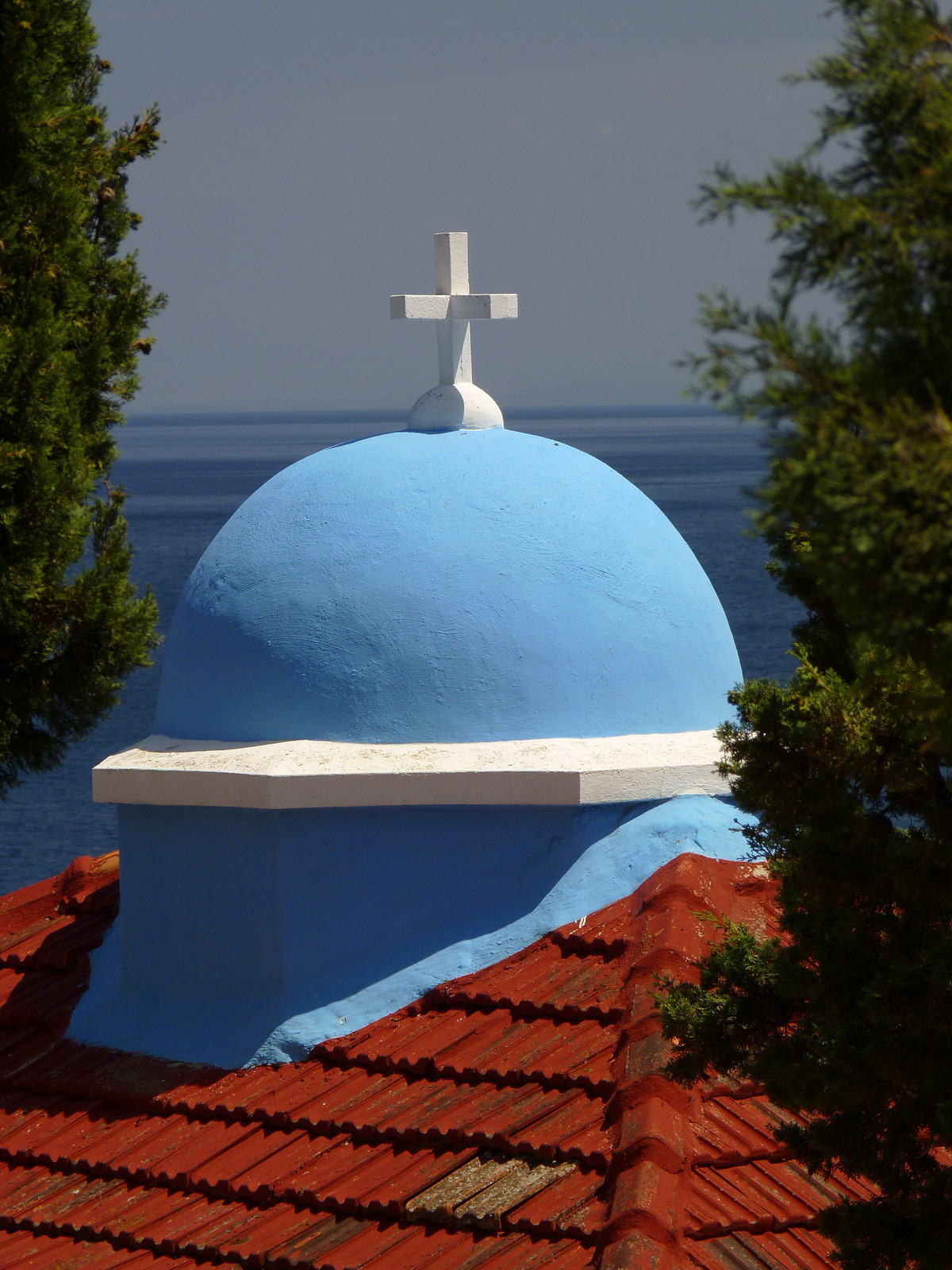
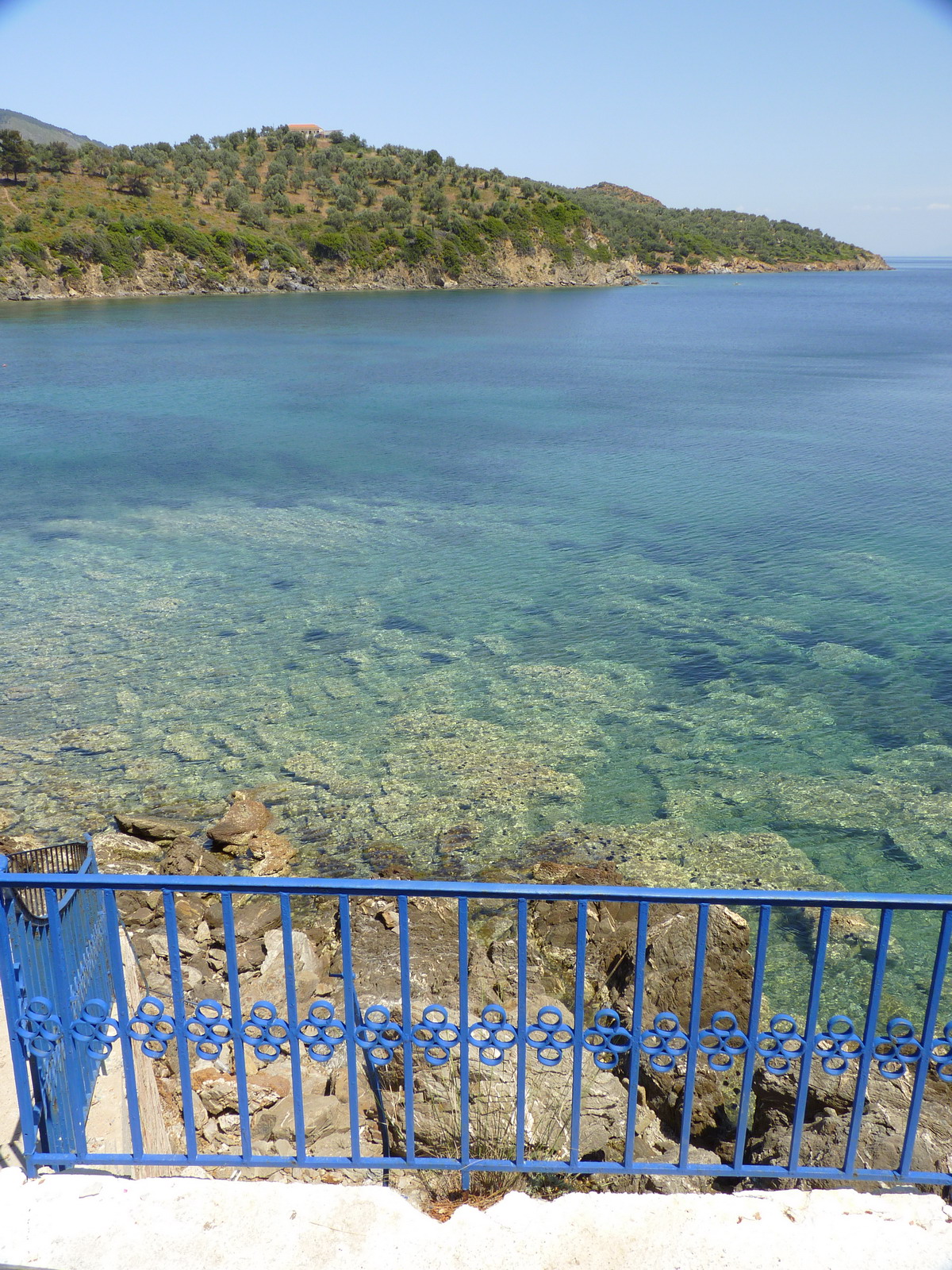
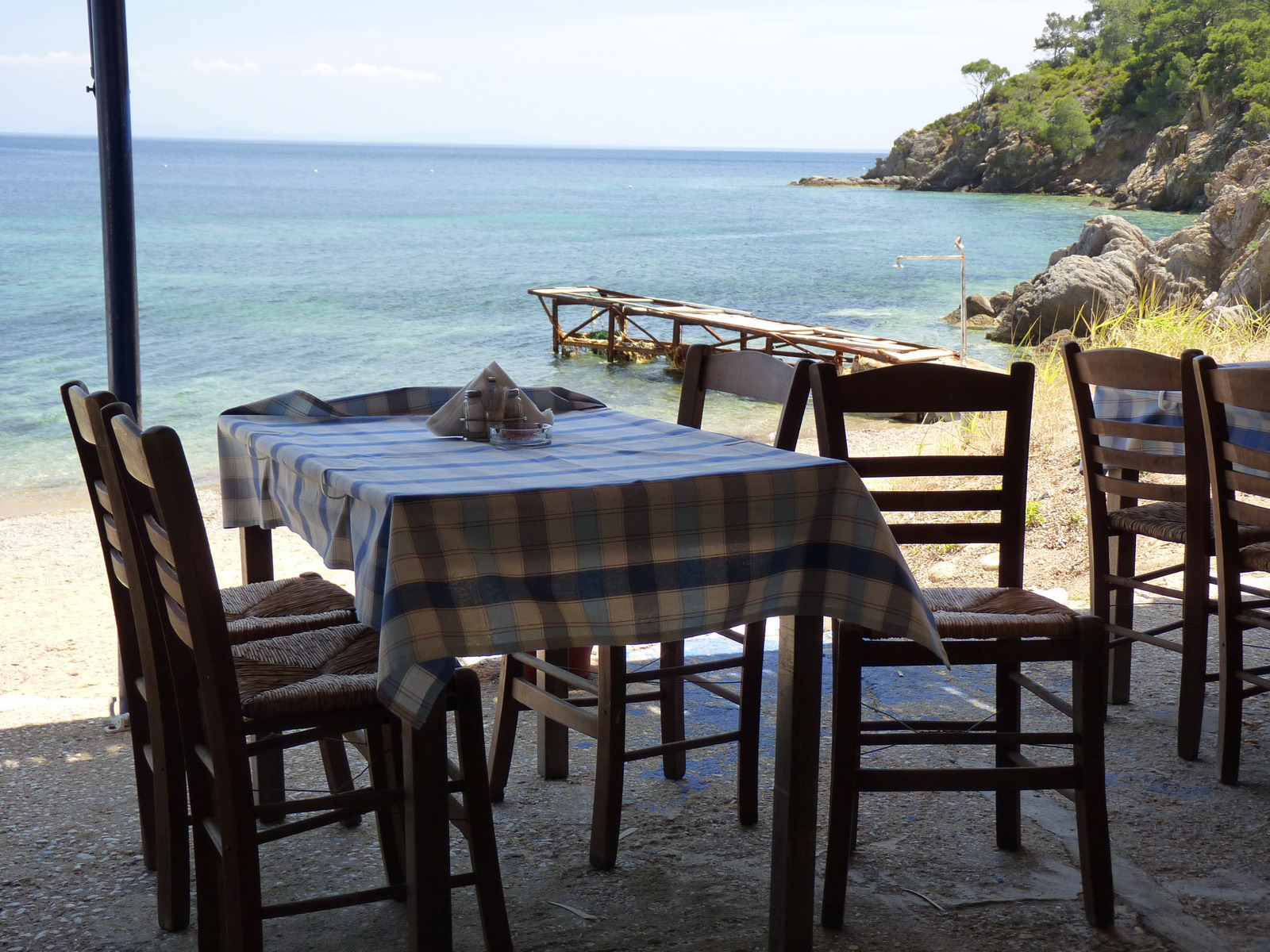
Below you is a beautiful cove with clear turquoise waters, a rocky shore, a white church and vivid blue paint details on adjacent buildings that create a scene reminiscent of the Cyclades. There are two small south-facing beaches, separated by a rocky outcrop. You can park at the roadside under the trees, or drive down a short dirt track to a car park and here is a fish taverna with a shady terrace overlooking the glistening sea and a small fishing jetty. The iconic little church is a short walk away and its walls provide a shady picnic spot as well as further panoramic views. It is worth a look inside – there are modern paintings of saints and a fresco on the interior of the high dome.
This is a popular beach spot for locals from Mytilene at weekends, but catch it mid-week out of season and you may have the place to yourself. This has to be one of the scenic highlight locations of the whole island.