Felt at 16:17 Tuesday 8th January 2013
Magnitude 5.8
39.64º N 25.55° E
Depth of 11 km
Only lasted a couple of seconds but it made my castor chair move.
Reported by Centre Sismologique Euro-Méditerranéen
Felt at 16:17 Tuesday 8th January 2013
Magnitude 5.8
39.64º N 25.55° E
Depth of 11 km
Only lasted a couple of seconds but it made my castor chair move.
Reported by Centre Sismologique Euro-Méditerranéen
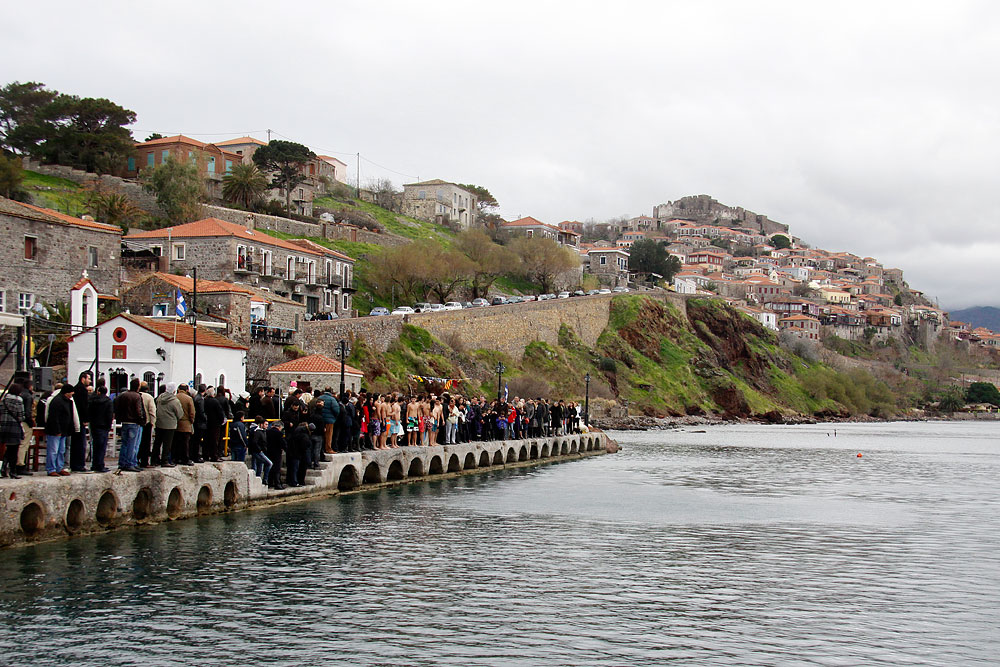 The Epiphany is celebrated on January 6th. In Greece, Epiphany marks the baptism of Jesus by John the Baptist in the River Jordan with the tradition of the Blessing of the Waters.
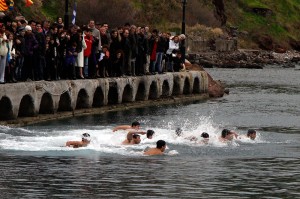
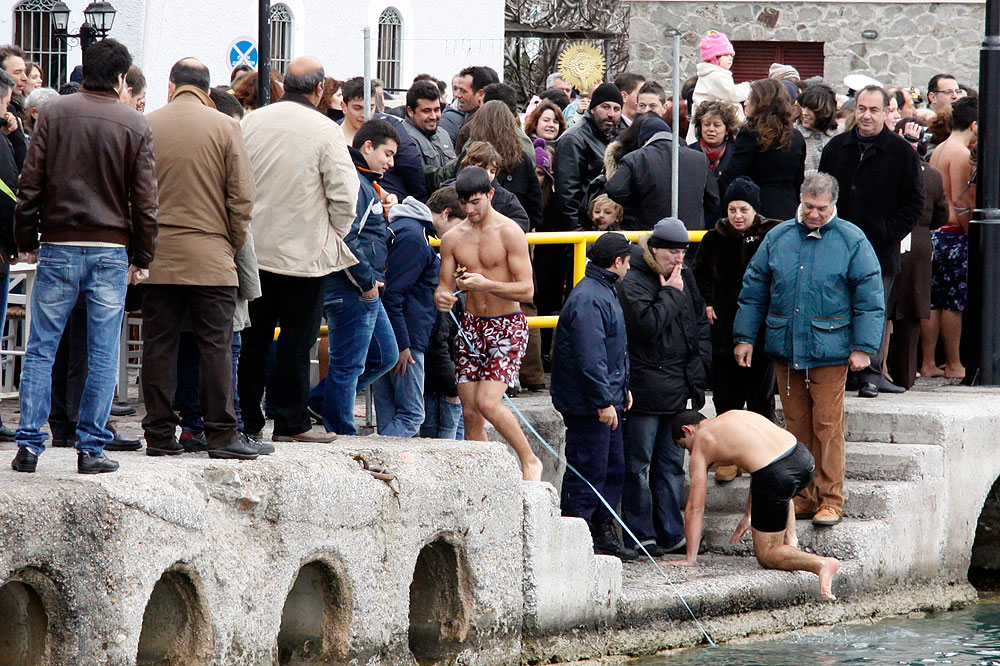
Molyvos was bitterly cold but the risk of hypothermia was not enough to put off the brave (some might say foolish). The village gathered at the entrance to the harbour wrapped in their warmest coats. Except of course for the hardy few who await the chance of glory in their swimming shorts.
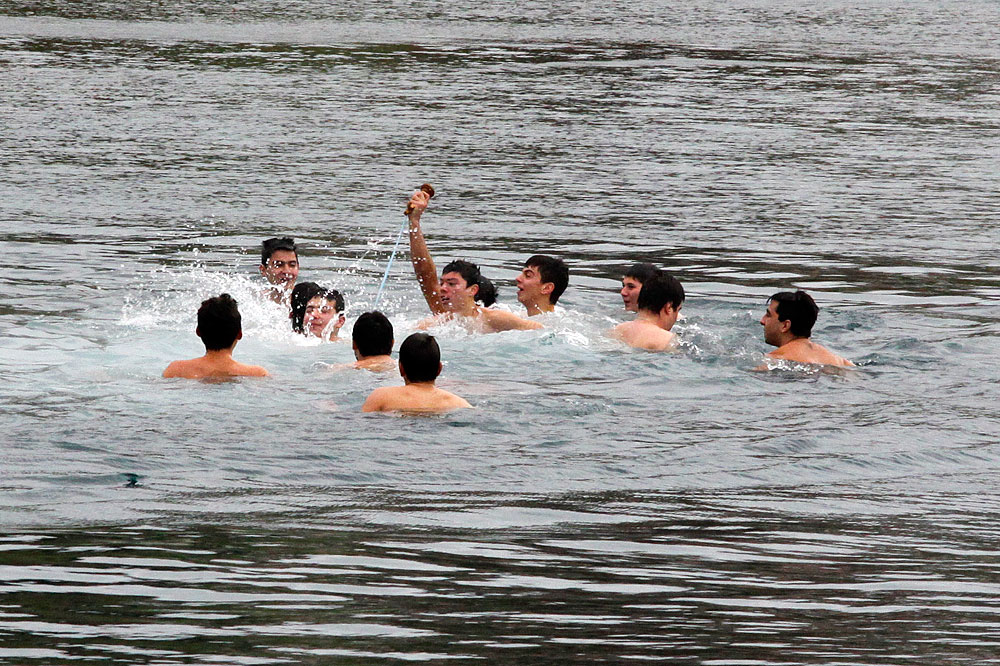
After the divine liturgy, the priest cast the cross into the water and the brave volunteers dive in and race to and retrieve the cross.
We salute all the young men who helped maintain an old tradition and congratulations to Alexandros Moliviatis who got there first.
Despite all the warnings, the world did not end on December 21 (well if it did, I apologise, but nobody told me). So 2013 is here and I wanted to wish you all Καλή χρονιά. 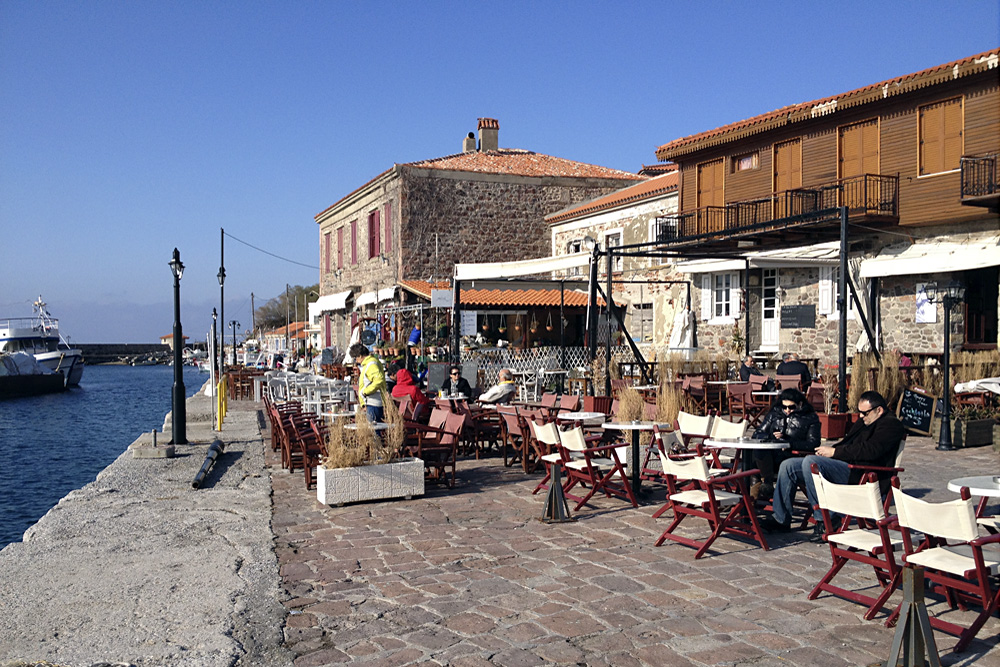 On New Year’s day, Molyvos was bathed in beautiful warming sunshine and we took the opportunity to sit out by the harbour and enjoy a coffee whilst watching the world go by. It is true that not much of the world did go by, winter here is very quiet, or perhaps the rest of the world did end and we missed it. That would be typical of the laid back attitude here, the world ends and Lesvos forgot to turn up! So assuming that there are still people out there to read this, I hope that in 2013 you
- find happiness
- enjoy fantastic health
- visit Lesvos and fall even deeper under its spell
Many visitors to Lesvos only see Mytilene on the way to and from the airport. In my humble opinion, this is a mistake. It has a fascinating history and is a bustling island capital. This is reflected in the number of places around the city that are worth visiting.
If you don’t believe me, check out this e-guide to Mytilene.
The guide is a couple of years old but is still a great list of must-see locations as little has changed. Print it out, bring it with you, tick off the places you have visited and then send me a report [please].
Do you know of any other guides to Lesvos that can help visitors make their plans? Please share them here so that people get the most out of their visit.
The custom of Klidonas has its routes in ancient times. Single women would gather around and an oracle would tell them the identity of their future husband. The word Klidonas derives from the ancient word Klidon which was the sound of prophecy, the random words and actions that came through an oracle during the ceremony of fortune-telling.
On 23 June, the day before St. John’s (Άγιος Ιωάννης ο Πρόδρομος) name-day, all single women would meet in a friends house and walk to the nearest spring. Then one girl whose parents were still alive (and most probably called Maria) would have to bring some water to the house and fill a ceramic pot with it. The water is called “silent water” because everyone who would have the privilege to carry out this mission would have to do so without saying a single word throughout the whole process. Each girl would then put a personal item into the pot and the pot would be sealed with a red cloth and put under the stars for the night. All girls were supposed to dream of their future husbands that night.
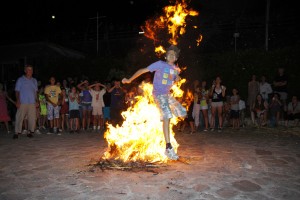 During that night men and women would gather sticks and light fires at the streets. Each neighbourhood had its own fire, the “karabousties” or “booboones” and the biggest one was lit at the Main Square of the village or in any open space so everyone could see. Everyone would then take turns and jump over the fires at least three times each.
Next morning before sunrise – so the magic influence of the stars would not disappear – the girl who brought the water would bring it indoors to begin the ceremony. Married women and men would also be invited this time so they could be witnesses to this important fortune-telling. “Maria” would then take the red cloth off and for each personal item she pulled out, a different rhyme would be read out. The rhymes or song lyrics or poetry that was read would represent the fortune-telling for each girl. When this process is over and when it is closer to sunset, each girl would have to fill their mouth with a sip of the ‘silent water’, stand beside an opened window and wait till she hears the first male name from the passersby. That was meant to be the name of their future husband.
The celebrations would end with a big feast where everyone was invited.
The custom of Klidonas is being kept alive in most places in Greece and exists in different variations. For example, nowadays not only single girls carry the water but boys also, the rhymes are now mostly rude anecdotes and poems so everyone, well, almost everyone, laughs and the ceremony is more like a party than a fortune-telling ceremony. There is always plenty of food and drink and in some areas like Molyvos, there is a huge fire lit in the centre of the village and people still jump over it. The bigger the fire the better, the ruder the anecdotes the merrier!
Every year, Klidonas is celebrated in Lefkonikou Square, Molyvos – see the map below